Identifying the birds in your garden and at your window
Tits, robin, sparrow, chaffinch, blackbird: simple clues to identify your visitors.
The first visitors to your feeder are almost always the same. With a few simple clues you'll soon recognise them at a glance. Here are eight common European birds, the ones you're most likely to see at windows in winter.
How do you tell a great tit from a blue tit?
The great tit: black head, white cheeks, yellow belly with a black stripe down the middle. It's the larger of the two.
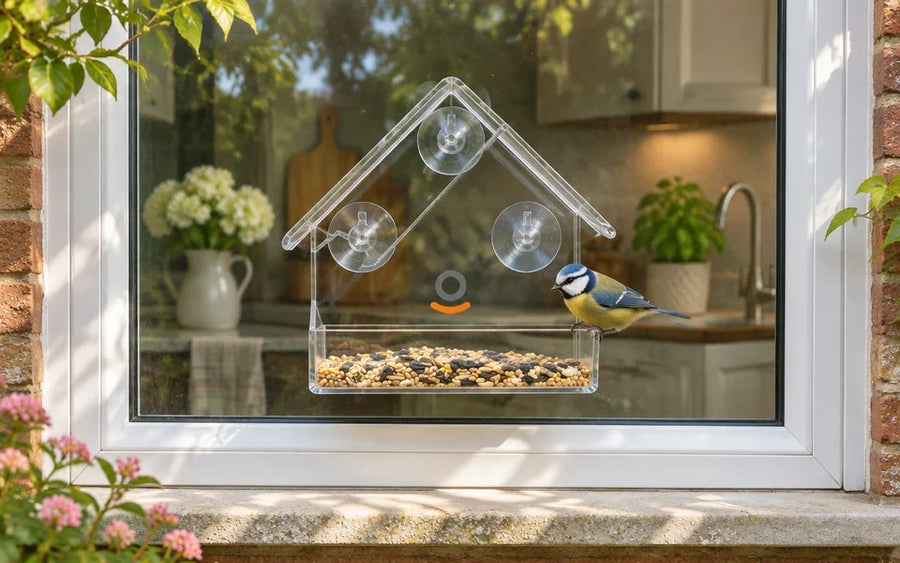
The blue tit: smaller, bright blue cap, white cheeks, yellow belly. A real acrobat, and often the first to dare.
The great tit: black head and black stripe on a yellow belly.
How do you recognise a robin?
Small and round, with an orange-red face and breast and a brown back. It's often alone and defends its territory, even in winter. It likes to feed on the ground or on a windowsill.
Sparrow or chaffinch: how not to mix them up?
The house sparrow: brown and grey; the male has a black bib and a grey crown. It often arrives in small groups.
The chaffinch: the male has a pinkish breast, a blue-grey head and two clear white wing bars. The female is duller, but has the same white bars.
Which other birds might you see in winter?
The blackbird: the male is all black with an orange-yellow bill; the female is brown. It prefers fruit and the ground.
The greenfinch: olive green, with bright yellow on the wings and tail.
The goldfinch: red face, black wings with a yellow bar. Impossible to forget.
The robin: orange-red breast, often alone.
How can you get better at identifying birds?
Look at the size first, then the colours on the head, then the wings.
Note what you see in a notebook, with the date.
Compare with an illustrated field guide or a bird charity's species pages.
Our free e-book features 15 common birds and how to recognise them. To get off to a good start, read how to fit a window feeder too.
The lesser-known tits
The marsh tit: glossy black cap, small black bib, grey-brown back. Discreet, it often carries a seed away to eat elsewhere.
The long-tailed tit: a little pink, black and white ball with a very long tail. It moves around in small, noisy flocks.
The crested tit: a small black-and-white crest on its head. Seen mostly near conifers.
The climbers
The nuthatch: blue-grey back, orange belly, black stripe through the eye. It's the only garden bird that walks down tree trunks head first.
The great spotted woodpecker: black and white, with red under the tail. The male also has a red patch on the back of the head. You often hear it drumming before you see it.
Do males and females look alike?
In tits and robins, males and females look very similar. In sparrows, chaffinches and blackbirds the difference is clear: males are more boldly marked, females browner and more discreet. If in doubt, look at the features that don't change: wing bars, bill shape, size.
Identifying a bird by its behaviour
It grabs a seed and flies straight off: often a tit.
It stays on the ground and chases the others away: often a robin.
They arrive in a small, chattering group: sparrows or long-tailed tits.
It pecks at seed fallen under the window: chaffinch, blackbird or collared dove.
The most common mix-ups
Blue tit and great tit: look at the cap, blue or black.
Female sparrow and female chaffinch: the chaffinch always has two white wing bars.
Female blackbird and thrush: the thrush has a spotted breast, the blackbird doesn't.
Rarer winter visitors
The bullfinch: the male has a pinkish-red breast and a black cap. Seen mostly near hedges and fruit trees.
The siskin: small, yellow-green and streaked, often in flocks in alders and birches.
The goldcrest: Europe's smallest bird, with a yellow crown stripe. It flits quickly through conifers.
The fieldfare: grey head, brown back, spotted breast. It arrives in winter and loves fallen fruit.
Listen before you look
Many birds are heard before they're seen. The robin sings even in winter, the great tit repeats a very recognisable "tea-cher, tea-cher", and the woodpecker drums on tree trunks. Getting into the habit of listening for a few minutes with the window ajar makes them much easier to find.
Frequently asked questions
Do I need binoculars? Not for the window feeder: the birds are a few centimetres away. They're mostly useful for the ones that stay in the trees.
Why does the robin chase the other birds away? It defends its territory all year round, even in winter. That's normal: the others come back when it moves off.
Do young birds have the same colours? Not always. A young robin, for example, is speckled brown and doesn't have its orange breast yet. You mostly see them in summer.
Why do I always see the same birds? They're the most common species near houses. Others sometimes turn up in very cold weather.
Can you count birds for science? Yes: several charities run winter bird counts open to everyone. Check with those in your country.
Article written by the Pinsolys team. This advice is general; if you find an injured or sick bird, contact a bird protection charity or a wildlife rescue centre.
The Pinsolys window bird feederClear · free e-book · 60 days to try it34,90 € · Buy 1, get 1 free